

20 Apr Falooda vs. Milkshake: Unraveling Two Beloved Cold Concoctions
In the vast universe of cold, sweet treats, few capture the imagination and delight the senses quite like Falooda and Milkshakes. Both offer respite from the heat, a dose of creamy indulgence, and a satisfying sweetness, yet they stand worlds apart in their origins, composition, texture, and cultural resonance. One is a layered, multi-textured dessert-drink symphony hailing from ancient Persia and perfected in South Asia; the other, a smooth, blended icon of American diners and youthful nostalgia.
Imagine sitting at a bustling street-side stall in Mumbai, spooning through vibrant layers of pink syrup, translucent noodles, plump basil seeds, and creamy kulfi. Now, picture yourself sliding into a booth at a classic American diner, sipping a thick, frosty chocolate shake through a striped straw. Both experiences offer pure bliss, but the journey to that bliss is distinctly different. This article dives deep into the heart of Falooda and Milkshakes, exploring their unique identities, comparing their characteristics, and celebrating their place in global culinary traditions. Prepare to embark on a delicious exploration that contrasts the intricate tapestry of Falooda with the comforting simplicity of a Milkshake.
The All-American Classic: What Exactly is a Milkshake?
At its core, a milkshake is a beautifully simple concept: a cold, sweet beverage typically made by blending milk, ice cream, and flavorings like syrups or fruit purees until smooth and frothy. It’s the quintessential creamy, sippable treat enjoyed worldwide.
The History and Evolution of the Milkshake
The term “milkshake” first appeared in print back in 1885, but interestingly, it initially referred to something quite different! Early milkshakes were often described as sturdy, alcoholic eggnog-style drinks containing eggs, whiskey, and milk, served as both a tonic and a treat. It wasn’t until the turn of the 20th century, around 1900, that the term began to signify the wholesome, non-alcoholic drinks made with milk and flavored syrups (chocolate, strawberry, vanilla) that we recognize today.
A significant development came with the popularization of malted milk powder, initially developed as a health food supplement. People soon started enjoying malted milk drinks purely for their taste, leading to the classic “malt shop” standard: milk, chocolate syrup, and malt powder.
The real game-changer, however, was the invention and widespread adoption of the electric blender. Steven Poplawski’s invention in 1922, and later the Hamilton Beach Drink Mixer introduced in 1910 (becoming common in soda fountains), revolutionized preparation. Before blenders, making a ‘shake’ involved vigorous hand-shaking of crushed ice, milk, sugar, and flavorings. Blenders allowed for the easy incorporation of ice cream, which truly defined the modern milkshake. A Walgreens employee in Chicago in the 1920s is often credited with popularizing the addition of ice cream scoops to malted milk drinks, creating a thicker, richer treat that quickly caught on.
By the 1930s, milkshakes were firmly established as a staple in American culture, particularly associated with malt shops and soda fountains. These became popular social hubs, especially for young people, cementing the milkshake’s image as a symbol of youth, innocence, and simple pleasures. Think Archie Comics, Grease, and countless scenes in American pop culture – the milkshake is often right there, setting the scene.
Texture, Flavors, and Serving
The defining characteristic of a classic milkshake is its smooth, thick, and creamy texture, perfect for sipping through a straw. The consistency can range from easily drinkable to spoonably thick, depending on the ratio of ice cream to milk.
Popular Flavors and Variations: While vanilla, chocolate, and strawberry remain the undisputed classics, the possibilities are endless.
- Fruit Shakes: Incorporating fresh or frozen fruits like bananas, mangoes, or berries.
- Candy/Cookie Shakes: Blending in cookies (like Oreos), candy bars, or brownies.
- Malted Milkshakes (“Malts”): Adding malt powder gives a distinct, slightly savory, toasty flavor dimension.
- “Freakshakes”: Over-the-top creations piled high with whipped cream, sauces, cake slices, donuts, candies, and more, blurring the line between drink and dessert.
- “Concrete” Shakes: Extra-thick shakes, often blended with mix-ins, that are so dense they barely move.
- Adult Milkshakes: Incorporating liquors or liqueurs for a boozy twist.
Milkshakes are traditionally served in tall, often fluted glasses, garnished simply with whipped cream and perhaps a cherry or a drizzle of syrup. The experience is primarily about sipping that cool, creamy blend.
Nutritional Considerations
Traditional milkshakes, especially those made with full-fat ice cream and sugary syrups, tend to be high in calories, saturated fat, and sugar. They are generally considered an indulgent treat rather than a health food. However, variations exist using lower-fat ice cream, yogurt, plant-based milks, and natural sweeteners like fruit, offering lighter alternatives.
The Exotic Jewel: Unveiling Falooda
Falooda (also spelled Faluda) is a stark contrast to the milkshake’s smooth simplicity. It’s a complex, layered cold dessert beverage, celebrated across South Asia, the Middle East, and parts of Southeast Asia. It’s less a drink to be quickly sipped and more an experience to be savored with a spoon and a straw, revealing different textures and flavors with each mouthful.
The Journey of Falooda: From Persia to South Asia
Falooda boasts a rich history tracing back to ancient Persia (modern-day Iran). Its ancestor is Faloodeh, a traditional Persian dessert consisting of thin vermicelli-like noodles made from starch, mixed into a semi-frozen sorbet of sugar and rose water, often served with lime juice or pistachios. Faloodeh itself dates back centuries and remains a popular treat in Iran.
The journey to the Falooda we know today began during the Mughal era in the Indian subcontinent (roughly 16th to 18th centuries). As Central Asian dynasties, including the Mughals with their Persianate culture and love for rich cuisine, established themselves in South Asia, they brought Faloodeh with them.
Under Mughal patronage, the dessert evolved. Milk was introduced, transforming the icy sorbet base into a creamier concoction. Other ingredients integral to modern Falooda were added:
- Sweet Basil Seeds (Sabja/Tukmaria): These tiny black seeds swell into gelatinous orbs when soaked, providing a unique texture and known for their cooling properties in Ayurvedic tradition.
- Vermicelli Noodles (Falooda Sev): Thinner, often translucent noodles, typically made from cornstarch, arrowroot, sago, or wheat, became a defining feature.
- Rose Syrup: This fragrant syrup imparts the characteristic pink hue and floral sweetness.
- Ice Cream or Kulfi: A scoop of ice cream (often vanilla, rose, or pistachio) or traditional dense, creamy Indian ice cream (Kulfi) crowned the creation, adding ultimate indulgence.
Falooda became a favorite in royal courts and gradually permeated society, becoming a beloved street food, a festive specialty, and a staple in restaurants across India, Pakistan, Bangladesh, Sri Lanka, and beyond. It’s particularly popular during hot summer months and festive occasions like Eid and weddings.
Texture, Flavors, and Serving
Falooda is all about the interplay of textures and layers. It’s simultaneously creamy (from the milk and ice cream), chewy (from the vermicelli), slippery/gelatinous (from the basil seeds and often jelly), and sometimes crunchy (from nuts).
Key Ingredients and Layers:
- Rose Syrup: Forms the sweet, floral base, often lining the bottom of the glass.
- Soaked Basil Seeds (Sabja/Tukmaria): Provide a unique pop and cooling effect.
- Cooked Vermicelli (Falooda Sev): Adds soft, noodle-like chewiness.
- Jelly/Jello Cubes (Optional): Often brightly colored, adding another layer of texture and fruity flavor.
- Chilled Milk: Forms the main liquid body, binding the ingredients.
- Ice Cream or Kulfi: The crowning glory, adding creaminess and richness.
- Nuts and Garnishes: Chopped pistachios, almonds, cashews, tutti frutti (candied fruit), or dried rose petals often garnish the top.
The most traditional and common flavor is rose, but many variations exist:
- Mango Falooda: Uses mango pulp and chunks, especially popular during mango season.
- Kesar Pista Falooda: Flavored with saffron (kesar) and pistachios.
- Chocolate Falooda: Incorporates chocolate syrup and sometimes chocolate ice cream.
- Fruit Falooda: Features a mix of fresh or canned fruits.
- Kulfi Falooda: Specifically uses Kulfi instead of regular ice cream, often denser and richer.
- Rabri Falooda: Includes Rabri, a thickened, sweetened milk delicacy.
Falooda is invariably served in a tall glass to showcase its beautiful layers. Due to the mix of solid and liquid components, it’s typically consumed with a long spoon to scoop up the layers, alongside occasional sips, perhaps with a wide straw. It’s fundamentally a dessert experienced through its construction.
Cultural Significance and Nutritional Notes
Falooda is deeply embedded in the culinary fabric of South Asia and communities influenced by its culture. It’s more than just a dessert; it’s associated with celebration, hospitality, and relief from the heat. Its presence at festivals, weddings, and as a popular street food underscores its cultural importance. There’s even an idiomatic expression in Hindustani: saying someone’s “izzat ka faluda hogaya” means their reputation has been shredded, alluding to the vermicelli noodles.
Nutritionally, Falooda can be quite variable. While milk provides calcium and protein, and basil seeds offer fiber, minerals (iron, calcium, magnesium), and potential digestive benefits, traditional recipes are often high in sugar due to the syrup, jelly, and ice cream. The vermicelli adds carbohydrates. Healthier modifications using sugar substitutes, less syrup, natural fruit purees, and low-fat milk or ice cream are possible, but the classic version is an indulgent treat.
Related: Cozy Up with Comfort: Your Ultimate Guide to Making the Perfect Speculaas Latte at Home
Falooda vs. Milkshake: A Head-to-Head Comparison
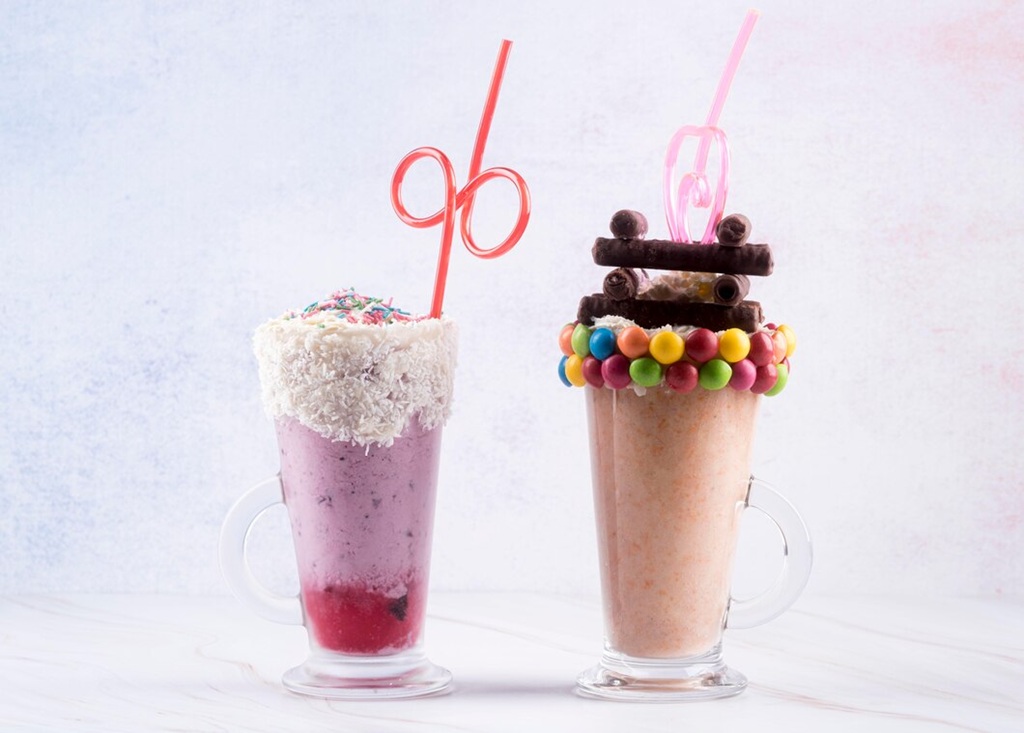
Let’s break down the key differences and similarities between these two delightful creations:
- Core Concept & Ingredients:
- Milkshake: Primarily a blended drink of milk, ice cream, and flavorings. Simple, homogenous base.
- Falooda: A layered dessert beverage featuring milk, rose syrup, vermicelli noodles, basil seeds, and ice cream/kulfi, often with jelly and nuts. Complex, multi-component structure.
- Texture:
- Milkshake: Smooth, creamy, homogenous. Thickness varies but generally consistent throughout. Designed for sipping.
- Falooda: Multi-textured. Creamy, chewy, gelatinous, slippery, sometimes crunchy. Requires both sipping and spooning.
- Flavor Profile:
- Milkshake: Typically focuses on one primary flavor (chocolate, vanilla, strawberry, banana, etc.), though combinations exist. Generally sweet and creamy.
- Falooda: Complex and layered flavors. Predominantly sweet and floral (from rose syrup), with milky notes and subtle contributions from seeds and noodles. Variations introduce fruit, saffron, pistachio, or chocolate notes.
- Preparation Method:
- Milkshake: Made by blending ingredients until smooth. Quick and straightforward.
- Falooda: Assembled by carefully layering pre-prepared ingredients (soaked seeds, cooked vermicelli, jelly, syrup, milk, ice cream). More time-consuming due to component prep and assembly.
- Origin and Cultural Context:
- Milkshake: American origin (late 19th/early 20th century). Associated with diners, soda fountains, youth culture, and American nostalgia.
- Falooda: Persian origin (Faloodeh), developed into its current form in Mughal India/South Asia. Deeply rooted in South Asian and Middle Eastern culinary traditions, associated with festivals, celebrations, and street food culture.
- Serving and Consumption:
- Milkshake: Served in a glass, primarily consumed by sipping through a straw.
- Falooda: Served in a tall glass showcasing layers. Consumed using a long spoon to eat the components and a straw (often wider) or sips for the liquid. It’s both eaten and drunk.
- Key Defining Ingredient:
- Milkshake: Ice cream blended with milk.
- Falooda: The combination of vermicelli noodles (Falooda Sev) and soaked basil seeds (Sabja) suspended in sweetened milk, typically rose-flavored.
- Health Perception (General):
- Milkshake: Often perceived as a high-calorie, high-sugar, high-fat indulgence due to ice cream and syrups.
- Falooda: Also considered an indulgence due to sugar (syrup, jelly, ice cream), but sometimes perceived as having slightly more “beneficial” components like cooling basil seeds and fiber, though overall calorie/sugar load can be similar or higher depending on preparation.
Making Your Own: A Simple Taste at Home
Curious to try making them yourself? Here are basic starting points:
How to Make a Simple Milkshake
Ingredients:
- 2-3 large scoops of your favorite ice cream (e.g., vanilla, chocolate) – about 1.5 cups
- 1/2 cup milk (whole milk recommended for creaminess)
- Optional: 1-2 tbsp syrup (chocolate, caramel), fruit puree, or vanilla extract for extra flavor.
Instructions:
- Let the ice cream soften slightly at room temperature for 5-10 minutes for easier blending.
- Place the ice cream and milk in a blender. Add any optional flavorings.
- Blend on low speed, increasing gradually, until just smooth and combined. Avoid over-blending, which can make it too thin.
- If too thick, add a splash more milk. If too thin, add another scoop of ice cream.
- Pour into a chilled glass. Garnish with whipped cream, sprinkles, or a cherry if desired. Serve immediately.
How to Make a Simple Rose Falooda
Ingredients (makes 1 serving):
- 1 tbsp sweet basil seeds (Sabja/Tukmaria)
- 1/4 cup Falooda Sev (thin cornstarch/wheat vermicelli) or regular thin rice vermicelli
- 2-3 tbsp Rose Syrup
- 1 cup chilled whole milk
- 1 scoop vanilla or rose ice cream (or Kulfi)
- Optional: 2 tbsp prepared jelly (like strawberry or raspberry), chopped pistachios/almonds for garnish.
Instructions:
- Soak Seeds: Soak the basil seeds in about 1/2 cup of water for 20-30 minutes until they swell and become gelatinous. Drain excess water using a fine sieve.
- Cook Vermicelli: Boil about 1-1.5 cups of water. Add the Falooda Sev and cook according to package directions (usually 3-5 minutes) until soft. Drain immediately and rinse with cold water to stop cooking and remove excess starch. Set aside to cool. (If using regular vermicelli, break into smaller pieces before cooking).
- Assemble: Take a tall glass.
- Pour 2-3 tbsp of rose syrup at the bottom.
- Add 1-2 tbsp of the soaked basil seeds.
- Add 2-3 tbsp of the cooked, cooled vermicelli.
- (Optional) Add jelly cubes now.
- Slowly pour in the 1 cup of chilled milk, trying to keep the layers distinct.
- Gently stir the milk slightly if desired, or leave layered.
- Top with a scoop of ice cream or kulfi.
- Garnish with chopped nuts or dried rose petals if using.
- Serve immediately with a long spoon and a wide straw.
Related: Chicha Morada: Uncorking the Purple Soul of Peru – Recipe & Story
People Also Ask (FAQs)
Q1: Is Falooda healthier than a milkshake?
- It’s complicated and depends heavily on the specific ingredients and preparation. A traditional Falooda with full-fat milk, lots of rose syrup, jelly, and ice cream can be very high in sugar and calories, potentially comparable to or even exceeding a rich milkshake. However, Falooda contains basil seeds, which offer fiber and some minerals, and potentially less fat if made without very rich ice cream compared to some super-premium milkshakes. Conversely, a simple milkshake made with low-fat milk and fruit might be lighter than a loaded Falooda. Some sources mention Falooda providing nutrients like calcium and protein (from milk) and aiding hydration. Ultimately, both are typically indulgent treats best enjoyed in moderation. Healthier versions of both can be made by controlling sugar, using low-fat dairy/alternatives, and adding fruit.
Q2: Can you drink Falooda with just a straw?
- While you can sip the milky liquid part, Falooda contains solid components like vermicelli, basil seeds, jelly, and nuts that require a spoon to eat properly. A very wide straw might manage some smaller bits, but a spoon is essential for the full experience.
Q3: What is the difference between Falooda and bubble tea?
- While both are sweet drinks with chewy elements, they are distinct. Falooda uses thin vermicelli noodles and tiny gelatinous basil seeds, typically flavored with rose syrup and served with ice cream. Bubble tea features larger, chewy tapioca pearls (boba) or popping boba in a base of tea (black, green, or fruit-infused), milk, or fruit juice, with various flavorings.
Q4: What are the main ingredients in Falooda?
- The core ingredients are chilled milk, rose syrup, soaked sweet basil seeds (sabja/tukmaria), cooked thin vermicelli noodles (Falooda Sev), and usually a topping of ice cream or kulfi. Jelly, nuts, and other flavorings like saffron or fruit are common additions.
Q5: What defines a milkshake?
- A milkshake is fundamentally defined as a blended beverage made primarily from milk and ice cream. Flavorings (syrups, fruit, malt powder) are added to create variety. Its key characteristic is its smooth, creamy, sippable texture achieved through blending.
Q6: Is Falooda a drink or a dessert?
- Falooda occupies a delightful space between a drink and a dessert. It’s often referred to as a “dessert drink,” “drinkable dessert,” or simply a “cold dessert.” Because it contains substantial solid elements requiring a spoon and is quite rich and sweet, it functions much like a dessert, but its milky base also makes it drinkable.
Conclusion: Two Distinct Paths to Sweet Satisfaction
While both Falooda and Milkshakes offer a cool, creamy, and sweet escape, they represent vastly different culinary philosophies and experiences.
The Milkshake is the epitome of smooth simplicity – a comforting, homogenous blend born from American ingenuity, forever linked to nostalgic images of diners and youthful indulgence. Its beauty lies in its straightforwardness, its creamy texture, and its adaptability to countless focused flavors. It’s a quick blend, an easy sip, a familiar pleasure.
Falooda, in contrast, is an intricate mosaic of textures and flavors, a testament to centuries of culinary evolution from Persia to South Asia. It’s a celebration in a glass, demanding engagement with its distinct layers – the floral sweetness of rose, the slippery pop of basil seeds, the soft chew of vermicelli, the cool creaminess of ice cream. It requires a spoon, patience, and an appreciation for complexity. It’s not just consumed; it’s experienced.
Neither is “better” than the other; they simply cater to different moods, cravings, and contexts. Craving something smooth, familiar, and quickly satisfying? A milkshake hits the spot. Seeking an exotic, multi-layered, dessert adventure? Falooda awaits. Both stand as beloved icons in their respective cultural spheres, proving that the world of cold, sweet treats is wonderfully diverse and endlessly delicious. So, whether you reach for a straw or a long spoon, enjoy the unique journey each of these concoctions offers.
Sorry, the comment form is closed at this time.