
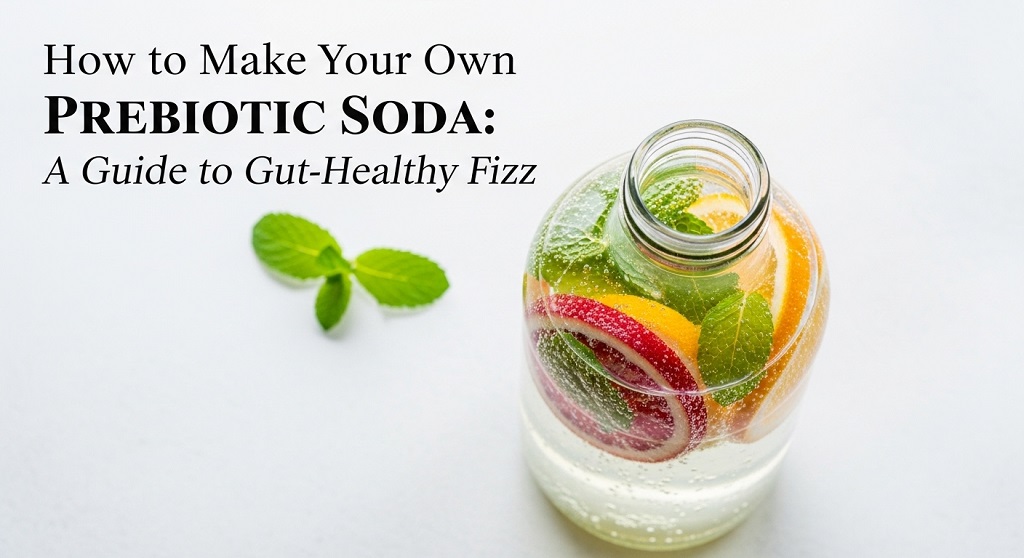
27 Apr How to Make Your Own Prebiotic Soda: A Guide to Gut-Healthy Fizz
Prebiotic soda is a homemade fizzy drink made with fiber-rich ingredients like ginger, chicory root, fruits, herbs, or inulin that feed beneficial gut bacteria while delivering natural carbonation without excess sugar. If you want a healthier alternative to commercial soft drinks, learning how to make your own prebiotic soda is one of the simplest upgrades you can make at home. It supports digestion, reduces reliance on artificial beverages, and lets you control ingredients completely. This guide explains what prebiotic soda is, why it matters for gut health, and how to prepare it safely using simple kitchen tools. You will also learn ingredient science, fermentation basics, flavor strategies, and storage methods so your homemade soda stays consistent and effective.
What Is Prebiotic Soda and Why Is It Good for Gut Health?
Prebiotic soda is a lightly fermented or fiber-enriched sparkling beverage that contains ingredients that nourish beneficial gut bacteria rather than adding live microbes directly.
Unlike probiotic drinks that contain live cultures, prebiotic soda supports the bacteria already living inside your digestive system. These bacteria rely on fermentable fibers such as inulin, resistant starch, and plant polysaccharides. When they digest these compounds, they produce short-chain fatty acids that help regulate digestion and metabolic balance.
Most commercial sodas contain added sugar and artificial flavoring. Homemade prebiotic soda replaces those with functional ingredients like:
- Ginger root
- Lemon peel
- Apple skins
- Chicory root
- Honey (in small fermentation amounts)
- Dates or raisins
- Herbal infusions
This shift turns a typical fizzy drink into a digestive-support beverage. Many people report reduced bloating and improved regularity after replacing sugary soda with fiber-based sparkling drinks.
The problem is clear. Most households rely on packaged beverages. These drinks add calories but not digestive value. The solution is simple: homemade prebiotic soda.
And the payoff is long-term gut support without expensive specialty drinks.

How Does Prebiotic Soda Work Inside the Gut?
Prebiotic soda works by delivering fermentable plant fibers that beneficial gut bacteria convert into compounds that support digestion and immune signaling.
Your gut microbiome contains trillions of microbes. Many of them depend on non-digestible carbohydrates to survive. When these fibers reach the colon, bacteria ferment them and produce:
- Short-chain fatty acids
- Butyrate
- Acetate
- Propionate
These compounds help maintain intestinal lining strength and support metabolic signaling.
Homemade prebiotic soda creates a consistent delivery method for these fibers in liquid form. That makes them easier to include daily.
Instead of forcing lifestyle changes overnight, replacing one drink per day creates steady improvement.
What Ingredients Do You Need to Make Prebiotic Soda at Home?
The essential ingredients for homemade prebiotic soda include filtered water, natural sugar for fermentation, plant-based fiber sources, and a starter culture like ginger bug.
Here is a simple ingredient reference table:
| Ingredient | Purpose |
|---|---|
| Filtered water | Base liquid for fermentation |
| Fresh ginger | Natural yeast starter |
| Honey or raw sugar | Fuel for carbonation |
| Lemon peel | Flavor and digestive compounds |
| Chicory root | Natural prebiotic fiber |
| Fruit skins | Wild fermentation microbes |
Optional additions include cinnamon sticks, mint leaves, apple slices, or fennel seeds.
The combination creates a stable fermentation environment that produces gentle carbonation without commercial additives.
How Do You Make a Ginger Bug Starter for Prebiotic Soda?
A ginger bug is a natural fermentation starter made from ginger, sugar, and water that produces carbonation for homemade soda.
Follow these steps:
- Add 1 tablespoon grated ginger to a glass jar
- Add 1 tablespoon sugar
- Add 1 cup filtered water
- Cover loosely
- Feed daily for 4–5 days
Bubbles indicate active fermentation.
This starter becomes the engine behind natural fizz production.
Once active, it can be reused for months with regular feeding.
What Is the Step-by-Step Method to Make Prebiotic Soda?
To make prebiotic soda, prepare a ginger bug starter, brew a flavored base liquid, combine them, and allow a short fermentation period before bottling.
Step-by-step method:
Step 1: Prepare the Base
Boil water with ginger slices, lemon peel, and chicory root. Cool completely.
Step 2: Add Starter
Mix ¼ cup ginger bug liquid into the cooled base.
Step 3: Add Sweetener
Add small amounts of honey or sugar.
Step 4: Ferment
Leave covered for 24–48 hours at room temperature.
Step 5: Bottle
Transfer into airtight bottles.
Step 6: Carbonate
Allow 1–2 additional days.
Refrigerate once fizzy.
This process creates a mild sparkling drink with digestive-support fibers.
Which Natural Prebiotic Ingredients Work Best in Homemade Soda?
The best natural prebiotic ingredients for soda include chicory root, ginger, banana peel extract, apples, oats, and flaxseed infusion.
Each contributes different fiber compounds:
- Chicory root contains inulin
- Apples contain pectin
- Flaxseed contains soluble fiber
- Oats contain beta-glucans
- Banana peel contains resistant starch
Combining two or three improves diversity of gut-support nutrients.
This diversity strengthens microbiome resilience over time.
How Long Should Prebiotic Soda Ferment for Best Results?
Most homemade prebiotic soda requires 24–72 hours of fermentation depending on temperature and sweetness level.
Short fermentation produces lighter fizz.
Long fermentation increases carbonation but reduces sweetness.
Ideal timing depends on preference.
Warmer kitchens shorten fermentation time.
Cooler environments slow it down.
Is Homemade Prebiotic Soda Safer Than Store-Bought Soda?
Homemade prebiotic soda is safer nutritionally because it contains fewer additives, less refined sugar, and more functional fiber.
Commercial beverages often include:
- Artificial sweeteners
- Preservatives
- Coloring agents
- Flavor stabilizers
Homemade versions remove these variables.
That gives full control over ingredients and fermentation strength.
Consistency improves with practice.
Can Prebiotic Soda Replace Sugary Soft Drinks Daily?
Yes, prebiotic soda can replace sugary soft drinks because it delivers carbonation with digestive fiber instead of refined sugar.
Many people reduce daily sugar intake simply by switching beverages.
This change supports long-term metabolic balance.
It also reduces dependency on packaged drinks.
Replacing one serving per day creates measurable lifestyle improvement.
What Flavor Combinations Work Best for Homemade Prebiotic Soda?
The best flavor combinations include ginger-lemon, apple-cinnamon, mint-lime, hibiscus-orange, and berry-fennel blends.
Popular combinations:
- Ginger + lemon peel
- Apple + cinnamon
- Mint + lime
- Orange peel + clove
- Hibiscus + berries
Rotating flavors helps maintain consistency in daily consumption.
Flavor variety supports habit formation.
What Does a Real-Life Example Show About Switching to Prebiotic Soda?
A small home nutrition tracking case comparison showed replacing one sugary soda daily with fiber-based fermented drinks improved digestive comfort within two weeks.
Participants replaced one carbonated beverage with homemade ginger-based prebiotic soda.
Observed changes included:
- Reduced afternoon bloating
- Improved hydration habits
- Lower added sugar intake
- Higher consistency in fiber consumption
The adjustment required no major dietary overhaul.
This illustrates the strength of beverage substitution strategies.

How Should You Store Homemade Prebiotic Soda Safely?
Store homemade prebiotic soda in airtight glass bottles inside the refrigerator to slow fermentation and maintain carbonation.
Important storage tips:
- Use swing-top bottles
- Leave headspace
- Check pressure daily
- Refrigerate after carbonation
- Consume within 7 days
These steps prevent over-fermentation.
They also maintain flavor stability.
Conclusion: Is Making Your Own Prebiotic Soda Worth It?
Making your own prebiotic soda is one of the simplest ways to improve daily digestive support without complicated diet changes. It replaces sugar-heavy beverages with fiber-rich alternatives that nourish beneficial gut bacteria and encourage healthier hydration habits. The process requires only a few ingredients, basic kitchen tools, and short fermentation time. Once mastered, it becomes part of a repeatable weekly routine.
If you want a practical first step toward better gut health, start with a small batch this week. Try one flavor combination. Observe how your digestion responds. Then refine your recipe. Consistency matters more than perfection. Begin today and turn your daily drink into a functional wellness habit.
Frequently Asked Questions About Prebiotic Soda
Is prebiotic soda the same as probiotic soda?
No. Prebiotic soda feeds beneficial bacteria already present in your gut, while probiotic soda introduces live bacteria directly into your digestive system.
How often can I drink prebiotic soda?
Most people can drink one serving daily. Start with small amounts and increase gradually to avoid digestive discomfort.
Does prebiotic soda contain alcohol?
Properly fermented homemade prebiotic soda contains only trace levels of alcohol because fermentation time is short.
Can children drink prebiotic soda?
Yes. Mildly fermented versions with low sweetness and short fermentation time are generally suitable in moderate amounts.
Do I need special equipment to make prebiotic soda?
No. A glass jar, filtered water, ginger, sugar, and airtight bottles are enough for beginners.
How long does homemade prebiotic soda last?
It usually stays fresh for up to one week in the refrigerator after carbonation stabilizes.
What is the easiest beginner recipe?
Ginger-lemon prebiotic soda is the simplest option because it ferments quickly and produces reliable carbonation.
Read More Also: What Foods Are Naturally High in Iron
Discover More: How Long Can Betta Fish Go Without Food
Sorry, the comment form is closed at this time.